Sunday, May 5, 2013

Tioga Lawyer: Ending Court Confusion: Owego Town Court vs. Owego Village Court

Many of the upstate New York cities have two courts. Usually one is called a town Court and the other is called a village Court. Are they really different in terms of legal authority? No. They are based upon the town's geography and history. Each Court has it's own jurisdiction (control and authority). If a crime (violation) occurs in one area it is a village matter, if in another it is a town matter.

In Ithaca, Cornell Campus, straddles both the town of Ithaca and the city of Ithaca geographically. It matters less whether you are arrested by the Cornell Police or the Ithaca City police, what does matter is the specific location you violated (or allegedly violated) New York state law.

Owego Town Court is in Apalachin, New York NOT Owego, New York

I have seen people google the city addresses and confuse their correspondence (responses) by mail and fax to the courts. I have also seen them drive hundreds of miles to the wrong Courthouse. They are easy to mix up. In a few of the places I go, like Candor, New York, they have both the town and village courts together. Both Judges sit next to one another, only feet apart, within the same courthouse.

Within the Town Courts we may also have more than one Judge. We may have a day court, and a night court. A day Judge and a night Judge. Some Courts, like Watkins Glen, used to have Court on Saturdays. Are you thoroughly confused? Which Judge is assigned your case may be a matter of timing or efficiency or luck.


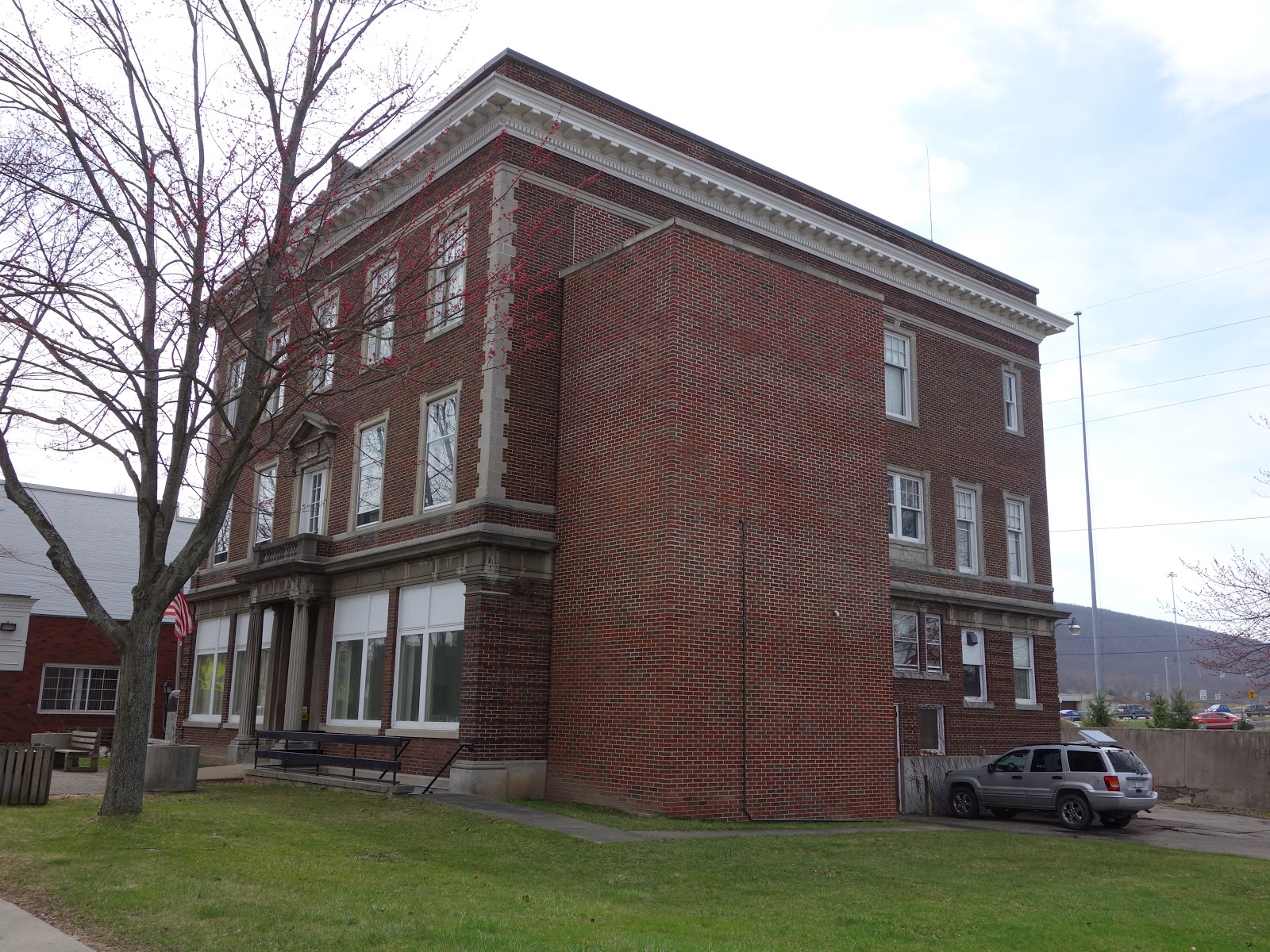
Owego Town Hall, location of Owego Town Court, right off I-17/86

Owego "Village" Court is in downtown Owego, New York.

The key takeaway to all of this is:

1. When you begin your case, call the Court.
2. Find out the specific location of your matter (case).
3. Write down the Judge's name that is assigned to your case file.
4. Write down the specific address, fax, and/or email numbers.
5. Find out the name of the Court clerk for that Judge (there may be two clerks).
6. Keep copies of all records, letters, tickets, and final documents of any matter.

Mistakes can sometimes happen, and you don't want to have your driver's license suspended or revoked because of a mix up. Worse than all of that, if you drive on a suspended license, your next pull over will result in an arrest at roadside for AUO 3rd (aggravated unlicensed operation) of a motor vehicle.

Lawrence (Larry) Newman, D.C., Esq.

http://www.ithacadwi.com

504 North Aurora Street
Ithaca, NY 14850

607-229-5184

Saturday, April 20, 2013

Why am I in Love with My New Faucet? The Cagney and the New York DWI Refusal Case


They say "Moen for life" but I've had three Moen faucets (kitchen plumbing fixtures), and nothing but issues. So I jumped ship to a brand called, Pfeister. The things that I seem to love most in life are both simple and elegant:

Dark chocolate
My wife
A great faucet
and the New York DWI refusal case

THE Cagney
Please don't call it a faucet, it is a water station!

First my new faucet (I meant to say water station), I'm even kinda glad that the old one died on us. This kitchen faucet is like the iphones of faucets. It has a beautiful and simple design. I love looking at it at different times of the day. Shapely and curvacous. To turn it on is so smooth it makes washing dishes an experience.

The Simple Refusal Case

One of things I love about the New York DWI Refusal is we usually have only one criminal charge,
the Common Law DWI, VTL 1192 (3) to deal with. Simpler yet, they (the police) must by a degree beyond a reasonable doubt prove:

Intoxication NOT impairment

Impaired and intoxicated, when does the one become the other?

Gradually by steps, cumulatively, we can add behavior up or distract it down for in the end or as some love to quip "at the end of the day" it is merely, AN OPINION. Nothing more or less than that. How much value or weight a jury or judge gives to a behavior or an appearance or the driving is a matter of perception. 

Odor of alcohol tells us nothing but the consumption of alcohol.
Bloodshot, watery eyes mean nothing without a baseline of appearance or a time of day.
Incoordination on roadside agility tests are all up for interpretation.

Lawrence (Larry) Newman
Attorney and Counselor at Law
Doctor of Chiropractic

504 North Aurora Street
Ithaca, NY 14850

607-229-5184

newman.lawrence@gmail.com


Finding the New York DMV DWI Refusal Hearings at 310 Town Center Road, Painted Post, NY

Where is 310 Town Center Road, Painted Post, NY?


Imagine it's the day of your hearing and you can't find the Court, or the Courthouse. It happens more often than you can imagine. Things change but sometimes google maps and the internet just doesn't catch up.

New York Department of Motor Vehicle DWI Refusal Hearings are held at locations different than the criminal proceedings. They are administrative in nature, and not criminal matters so they do not require a criminal court or courthouse. Tompkins County and Cortland County DWI criminal cases hold their hearings at the Cortland County Courthouse.


Erwin Court House, Village of Painted Post, New York
"Old" location of the DMV hearings
Erwin Town Court vs. Erwin Town Hall

The DMV hearings were held at the Erwin Court house at 117 Water Street, in the Village of Painted Post, New York for many years. These hearings were moved to a brand new location about two years ago. Now they are held on the other side of town in the new Erwin Town Hall at 310 Town Center Road, Painted Post, New York.

Tioga County, Steuben County, and Chemung County DWI criminal DMV Refusal case license hearings are held in Painted Post, New York at 310 Town Center Road.  So if you have a DWI refusal case pending in the City of Elmira or the City of Corning or Horseheads, Your DWI refusal case DMV hearing is going to be held here.

Erwin Town Hall, West of I-17/86
DMV DWI Refusal Hearings are held here.
At the Erwin Town Hall not the Erwin Court

The Problem Solved 

Google maps and google still bring you to 117 Water Street, when seeking (searching) 310 Town Center Road, Painted Post. Do not try to search for the Harley Davidson dealership or the Fox Chevy Buick Cadillac dealership in Painted Post because they both will take you to the Village of Painted Post as well. Both dealerships are right next to the new Erwin Town Hall building. If you want to google search use Robert Dann Drive, Painted Post, NY

BTW Erwin Town Hall is a beautiful, modern building, and the DMV hearing room is huge with comfy chairs.

I guess Town Center Road is fairly new, but you would think after two years, it should be on google maps and your GPS but unfortunately it is NOT!

If coming from the East, take I-17/86 to NY 417/South Hamilton Street, turn right onto Town Center Road. Go straight to the end of the road.


Winning The NYS DWI Refusal Case, here:

http://dwicom1.wpengine.netdna-cdn.com/files/2013/10/1294-HowtoWintheNewYorkDWIRefusalCase.pdf

Always consult with an attorney about any criminal or non-criminal charges you have pending to discuss your options and/or defenses.

Originally, born and raised in Brooklyn, NY. My father was a NYS corrections officer, and my mother a waitress. I now live in Ithaca, NY with my wife (of 25 years), and four kids. I have a B.S. in Human Biology, Doctorates in Law and Chiropractic, and a Post Graduate in Acupuncture. I practiced as a Chiropractic Physician in Florida from 1986 to 1995. I graduated law school in 1997, and went on to practice trial law in FL, NY, NJ, and PA. I love practicing criminal defense and injury law within the Finger Lakes Region of New York State.

Over 90% of the cases that I take on are New York DWI defense cases. I am certified as a breath tester by the Department of Transportation, the guidelines of the International Association of Chiefs of Police (IACP), and the National Highway Traffic Safety Administration (NHTSA). I am certified in Field Sobriety Tests, and an active member of the National College of DUI Defense (NCDD). My online materials include over 450 blog posts, dozens of articles, and over 440 informative videos on my youtube channel.

I have co-authored Strategies for Defending DWI Cases in New York, in both 2011 and 2013. These are West Thomson legal manuals on New York State DWI defense, and focus on the best practices for other lawyers handling a New York DWI case. Included in Strategies for Defending DWI Cases in New York are materials I provide clients, such as my fee agreement and ways to avoid misdemeanor probation. I was selected by Super Lawyers as a Upstate New York 2013 Rising Star in DWI/DUI Defense based on my experience, contributions, and professional standing.


http://www.ithacadwi.com

Supreme Court Rules No Way on Unconsented / Unwarranted DWI Blood Tests

The Nine Justices of SCOTUS
Rule 8 to 1 on Police DWI Blood Cases
from wiki.mediacommons.com


Well before it got to the highest court in the land, a driver in Missouri pulled over for DWI refused a breath test. So the angry police officer took him to the hospital, and directed a nurse to take his blood.

This was without his consent (permission) and without a search (court) warrant from a Judge. Going back to our 4th Amendment to the Constitution: NO Unreasonable Search and/or Seizure.

So the case went all the way to SCOTUS (The Supreme Court of the United States) to decide the:

Question: Can police in a DUI/DWI take blood (your body fluids) without a search warrant?

This is not a new question, if fact this is an old question BUT the police were looking for (more like hoping for) a NEW answer from the nation's highest court in 2013.

Yes the District Attorney screamed this is a DWI/DUI case so let's trample the Constitution, the prosecution argued in their favor (to get the blood) that alcohol leaves the blood stream quickly.

The Loosey-Goosey Two Hour Rule

Even though they have two hours in New York State to get a sample, and even if they do not get it in within the two hours it can still be used against you. Only it will have less weight on the scales of justice. That is the new case law, in the past it was suppressed, NOW we let a jury give it "weight" as in credibility. Remember we have Driving WHILE Intoxicated. So if the "while" is longer and longer from the actual test, it's relevance and accuracy become more and more questionable. Amen!

The Court ruled 8 to 1 against taking blood samples without a warrant, NO WAY they said.
No warrant = no blood = no breath = no sample of your fluids. In the end the Missouri driver with a .14 BAC had the blood test thrown out ie. suppressed from being evidence.

You want it, they told the police and the prosecutors, then you have plenty of time to go get a search warrant from a Judge. Follow that 4th amendment.

Thank G-d.

http://www.ithacadwi.com

Dr. Lawrence (Larry) Newman

Attorney and Counselor at Law
Doctor of Chiropractic

504 North Aurora Street
Ithaca, New York 14850

newman.lawrence@gmail.com

Can You Win a DMV DWI Refusal Hearing? Nothing Ventured, Nothing Gained!

from dbsquaredinc.com


You know the old expression, "nothing ventured nothing gained." If this isn't an AMER-I-CAN philosophy then I don't know what is?

Well it is as applicable to DMV license refusal hearings as it is to asking a girl for her number (sorry I'm old school). I wouldn't be with my lovely wife (25 + years) if not for going up to her, and her friends. She towered over me with her shoes (she's 5'9, me 5'6), and my confidence won her over.

I had a guy call me the other day, and tell me that his attorney told him not to even show up, why bother, you are going to lose anyway, right?  His attorney could not be more wrong. The hearing is good to attend, and to be prepared for on many levels:

1. You will definitely hear "how" the cop plans to testify about you
2. You will learn how they plan on proving that you were intoxicated (odor, field tests, coordination)
3. You will be able to challenge some of the evidence (their opinion)
4. You can point out any issues with the police safeguard procedures (4th, 5th, and 6th amendments)
5. You can make a record (they are taped) of any of this and/or bring a Court Reporter
6. You can have your client testify on their behalf about medical issues
7. You may be able to get some pre-trial discovery (police report)
8. Your attorney may even get the cop on your side with the ADA to help your case

Over the years I have developed working relationships with many troopers, deputies, and local police. These people appreciate cooperation and respectfulness with law enforcement. A good word from them with the ADA may mean the difference in reducing charges or penalties.

I have won some hearings because the police have the burden of proof. They must state on the record their reasons for the stop, the arrest, and how they processed you. How they warned you? How they explained your rights? If they did not follow procedures properly then the refusal can be thrown out, you win and they lose.

In the end, the hearing can be a WIN in many other ways than just your driver's license privileges.

http://www.ithacadwi.com

607-229-5184

newman.lawrence@gmail.com

Thursday, March 21, 2013

A Defense Lawyer's Viewpoint: Using The Duty and Obligation of the Police to Investigate DWI


Walk and Turn After Saturation Patrol Stop, from AAA.com

Law enforcement has a difficult job for a number of reasons. They are the people on the street and the foundation of our criminal justice system. They must play multiple roles under the motto of "to serve and protect." They must be peacekeeper, protector, investigator, watchkeeper, psychologist, and sometimes even social worker. With so many repsonsibilities and pulls in different directions doing their diligence on any one task may prove to be difficult.

The DWI Arrest

Recently I was cross examining an officer and he told me he was on a "DWI saturation patrol." In  other words the police had decided to commit a great number of cars and officers to a specific Saturday night. They have found that this is a far more effective technique than the DWI checkpoints (which have shown to be evaded). They did a round up of all the late night/early morning traffic offenders but they were really seeking (more like hunting) drunk drivers.

# 1  Their first duty, responsibility, and obligation when investigating a crime (like a DWI) is to be thorough and complete. Are there INNOCENT REASONS for bad driving behavior?

If they see a car swerving or driving erratically, and then initiate a stop of that car they must follow a protocol. The stages of police investigation generally follow a graduated approach from the less invasive (intrusive) to more invasive.

Is there an innocent explanation for the alleged bad (illegal) behavior, ie. the traffic violations?
Did the person drop their cell phone?
Reach for their soft drink, or Big Mac?
Were they fiddling with their car gps or radio?

The question at this stage is whether there are exculpatory reasons for the behavior? Ones not related to being impaired and/or intoxicated by drugs and/or alcohol. The police must seek the incriminating evidence (ie. open containers, bongs, pipes, drugs) and even the non-incriminating (ie. a Wendy's chili or a bag of chips).

# 2  Adequate investigations must meet probable cause standards of inquiry.

Did they ask about these other reasons? Did they make any inquiry with the person being charged or anyone in the area?

As Professor of criminal justice Stanley Fisher so quotes about exculpatory evidence (directed towards non guilt),

"where a criminal investigation is conducted ALL reasonable steps are taken for the purposes of the investigation and, in particular all reasonable lines of inquiry are pursued."

Emphasis here is on REASONABLE because PC (probable cause) is reasonable and trustworthy information that a particular person committed a particular crime.

If there was an accident, did the fact that the roads were icy make that a contributing factor or the main factor of a crash? Did any other facts that they could have discovered contribute to their opinion? Were all witnesses interviewed and all leads pursued? Diligence is looking, seeking, and uncovering .all the evidence available. If they fail to interview witnesses that are or were present that is UNREASONABLE

If they note in their report the observation of red, watery, and glasses eyes have they asked about crying, allergies, and eye problems? If the person stated they came from a fight with their boyfriend, is that noted in their official police report?

Are have they just assumed, alcohol and drugs are the culprit?
Have they properly collected, and documented their evidence? Attention to detail is the mark of an excellent law enforcement investigator.

HGN (horizontal gaze nystagmus) must be given properly to be used in Court
from AAA.com


#3 Have they avoided "tunnel vision" and "confirmatory bias?"

Kinda like gather up all the usual suspects, but if they see everyone with speeding at 1 am as a drunk first and ask questions later, we all got a problem. Have they accounted for nervousness, footwear, and/or weather conditions when giving and scoring field sobriety tests? Do they leap to conclusions early in their investigation or do they keep an open and objective mindset throughout?

Afterall whose job is it anyway?

They who are going to make an arrest decison are the ultimate deciders. They have the power and therefore the accompanying responsibility to insure the correctness of their actions. It is also ultimately their burden to prove a person's guilt for what they are charged. It is not the responsibility of the person on the street to assert their innocence.

Larry Newman, D.C., Esq.

Doctor of Chiropractic
Attorney and Counselor at Law

http://www.ithacadwi.com

newman.lawrence@gmail.com

Sunday, March 17, 2013

Being Able to Explain Your New York Past on Applications for Jobs, Employment, Licenses, and Certifications


Criminal Background checks are becoming the norm,
from earlcapps.blogspot.com

I get calls about how to answer questions on job applications, teacher certifications, license renewals (and new applications), and even lease agreements. Sometimes it seems as if everyone wants to know about your
Past to get or to have just about anything. All of your life history and baggage, from a DWAI, to a shoplifting charge, to a marijuana violation you got in College threaten to derail your chances at an apartment or an internship or a new job. Read on to discover how to NOT allow the Past AFFECT Your Future.

What's the Law? Federal Law vs. State Law

People want to know what people can "legally" ask about your criminal history. Federal law states "arrest and conviction" information are OK to ask about. This includes even those arrested, and then found not guilty. Employers are supposed to allow you an opportunity to explain to them about your past behavior, and to not hold it against you unfairly. They must consider three things:

1. the nature and gravity of the offense,
2. the time that has past since the offense, and
3. the nature of the job/position/work you are applying for.

Obviously a convicted sex offender (or even someone with multiple allegations ie. arrests for sexual deviancy) would not be a great job applicant for a daycare center nor a habitual DWI offender for a school bus driver position.

New York State Law further limits (Federal Law) employers from asking about:

1. Sealed Violations (all violation level offenses except three)
2. All Arrests
3. Non Criminal Convictions
4. Adjudicated Convictions (vacated by a Judge for those less than 19 Years old and qualify)

In New York State, employers can ONLY ASK about criminal convictions (misdemeanors and felonies), and they cannot legally hold them against you. Depending upon the state you are applying in, they might allow more or less than New York. For example, California allows employers to ask about arrest history.

Aren't We In The Information Age?

What is truly confidential anymore? Fears of terrorism, child abduction, corporate scandal, fiduciary abuses, and inflated resumes have increased the use of background checks. Even from the standpoint of negligent hire, any corporation wants to limit their exposure to potential lawsuits via inexpensive Pre-Employment Screenings and vigorous inquiry.

The internet, globalization, and social media have turned the private parts of your life upside down and inside out. Everything is now fair game.

A Defense Lawyer's Perspective on Background Checks

I believe that Every New York criminal case involves looking at and resolving the past, the present, and the future. There is always something you did (the history), always something you are currently facing (the charges), and always something in your future (the mystery) that might need something.

Past guilt and future fear can lock you in place. Not knowing is maybe worse then just doing the necessary work (and cost) associated with dealing and preparing properly. You will eventually be moving forward and onward with your life.

Do any of your events (offenses, convictions, violations) need CONTEXT? There will eventually be a time and place for explanation.

What's In YOUR Record?  from forums.eslcafe.com

The Dangers of Loose Ends and Lack of Context

I recently had a teacher call me with a 20 year old DWAI (non-criminal) conviction found on her FBI background check. She was fired (after being hired) for lying on her employment application. Add to this the embarrassment and humiliation of having to explain her firing to all her students and their parents.  They probably assumed she was some level 3 sex offender or something. I guess the Human Resource person did not know that a New York DWAI was NOT a crime, and that she in FACT had no criminal convictions.

They had asked on her application about prior drug, alcohol, and/or sex convictions. The KEY word here is "CONVICTIONS." This requires a clear definition. To assist her honesty in answering, they also gave her three example situations of what they considered to be "convictions" with all examples being clearly "criminal" misdemeanors.

So she answered truthfully, NO I have NO convictions based upon your definitions. In New York a DWAI i a traffic violation, a non-criminal offense, certainly NOT a conviction. Her FBI background check showed the original charges of DWI but also the reduced traffic offense of Operating While Ability Impaired.

The FBI record had NO offense level area or key or delineation between the criminal DWI charge, and the non-criminal DWAI conviction. So she was labeled by human resources and the board of education of that county as a liar, and criminal all in one fell swoop.

THE FIVE STEPS YOU MUST TAKE 
TO INSURE YOUR FUTURE 
WITH ANY AND ALL NEW YORK CHARGES

First, have an attorney do the best they can to reduce, resolve, and consolidate your criminal charges. Can some be dismissed? Can some be downgraded? Remember New York State offenses have three levels: violation, misdemeanor, and felony. Even within the levels are more degrees, like aggravated or 2nd, 3rd, or 4th, etc. In this context more (higher) is less caustic and potentially troubling.

Second, get a copy of your Certificate of Disposition. This will show and document the actual original charged offenses, and final convicted offenses. It will also nicely KEY: V = Violation (non-criminal) from M = Misdemeanor. Always helpful to have a key.

Third, is this document accurate? and/or Does it require an attorney to provide a legal explanation to an employer and/or future employer and/or license/certifying board? You should be aware that only a handful of states have violation level DW or DU charges, so they are in the minority. It would probably be best to prepared to explain your outcome in the future.

Fourth, Will an old DWI or any drug related charge require your producing an drug/alcohol evaluation or assessment. A document (report) that shows or explains a prior diagnosis and/or prognosis and whether treatment was warranted.

Fifth, Social Media, like Facebook, Twitter, Linked, etc. may expose your private life to public scrutiny. Is there anything (photos, videos, posts) online that may reflect badly upon your character, your honesty, your maturity, and/or your responsibility? Remove them if possible.

Remember that the nature of the game in giving a job, certification, license, or position is:
RISK ASSESSMENT and MANAGEMENT.

No organization or State/Government Body or licensing board wants to take on or assume any unnecessary risk or liability. They have much to lose and nothing to gain by going out on a limb for people with unexplained "criminal" histories or behavior patterns. Be prepared to allay anyone's fears, with the needed documentation, and a clear concise explanation.

Lawrence (Larry) Newman

Doctor of Chiropractic
Attorney and Counselor at Law

http://www.ithacadwi.com


newman.lawrence@gmail.com