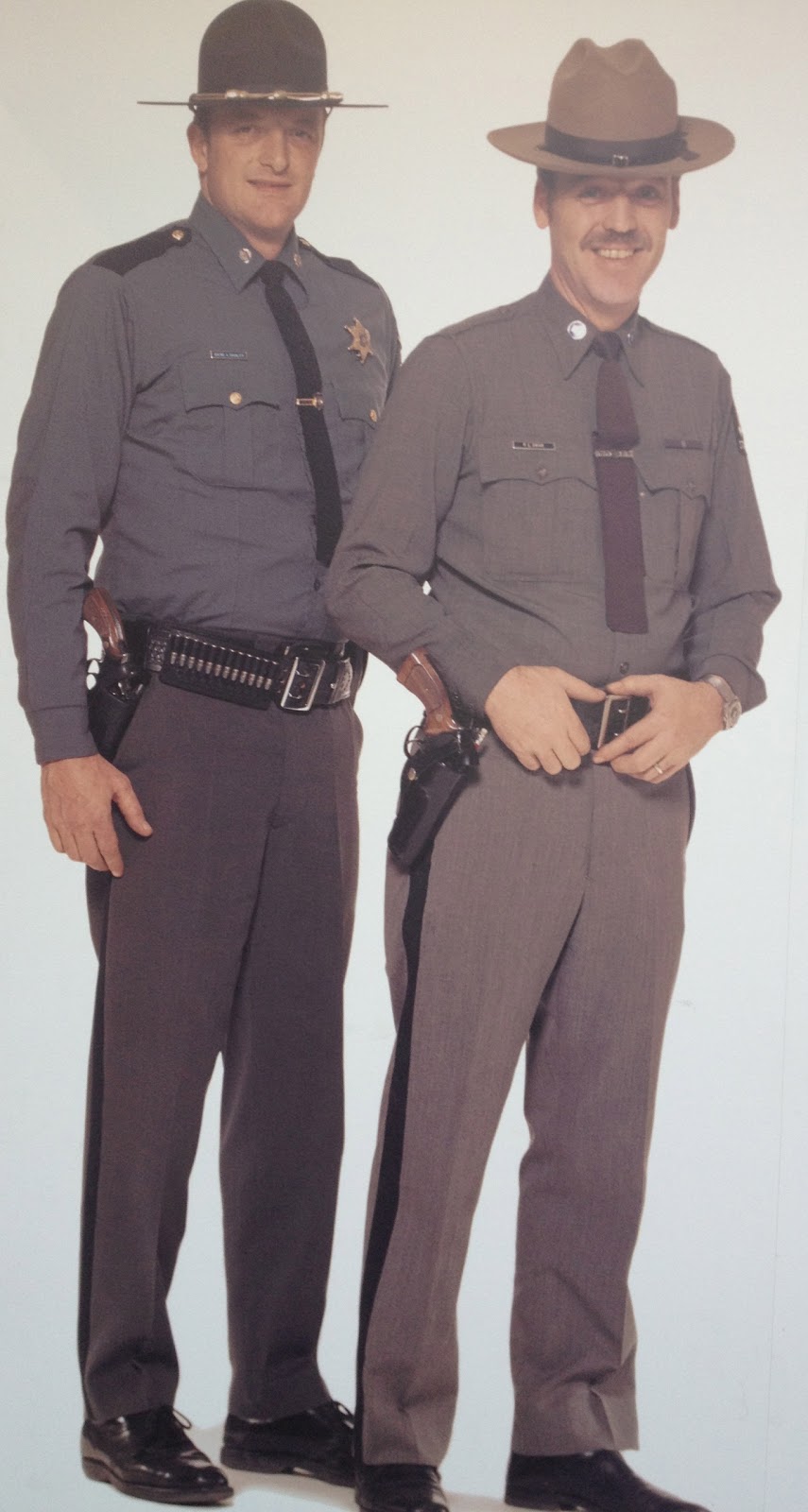
People come to the Finger Lakes region from New York city and New Jersey where traveling at speeds of 85 mph and 95 mph are an everyday occurrence. This is not so where I live and practice. Most of the roads (not the interstate) are set statewide at 55mph. Going through small villages and towns the speed limits are 30 mph. People move slower here. Up here, Only I-17/86 and I-90 have the upper limit of 65mph. It is easy for city dwellers to break our limits.
As a lawyer that handles lots of speeding tickets in the boonies (let's call it what it is) of Upstate (really upstate- NOT Poughkeepsie) New York, we do have a big positive when it comes to getting a speeding ticket here: The proof level is the criminal level of "beyond a reasonable doubt." Meaning that the prosecution must prove that you were in fact speeding based upon some or all of the following:
1. A police officer must testify that s/he has experience and training with estimating speed by visual confirmation. He gauged your speed, was able to see your car clearly, explain physical markers used (a confirmed distance), timed you (clocking), and then made out an estimated speed.
2. If he used his car's speedometer, to track you and you car, that his car's speedometer was calibrated and checked prior or right after the citation was given.
3. Lastly, if he used RADAR (Upstate Troopers and Police use the Stalker Dual) then the following must be shown for a successful prosecution:
- The officer must have adequate training (this is pretty minimal-hours) and experience in the operation of the RADAR unit.
- The officer must testify as to how the unit was set up and the conditions the unit was operated under.
- It must be shown that the unit operated with a minimum possibility of distortion from external interference.
- The unit must be tested with an external source, such as a tuning fork (s) or an actual test run with another vehicle that has an accurately calibrated speedometer. Usually they have two tuning forks, 25 mph and 40 mph, they may even check with an 80 mph one.
NOTE: One primary New York State case established the use of a tuning fork to check RADAR before and after a speeding ticket is given. In New York v. Perlman (1977) the Suffolk County District Court ruled that a RADAR device was NOT proven accurate because NO tuning fork (external) test had been performed either before or after the arrest.
A successful prosecution may also include testimony from the officer/trooper on the following:
1. Location of the perpetrator (offender) or as I like to quip, the violator, ie. the target vehicle.
2. Location of the patrol car at the time of the observation and/or RADAR.
3. Other cars/trucks/vehicles on the road or near the target vehicle.
Many states place the prosecution's level for traffic infractions with a civil standard of proof, "preponderance of the evidence," meaning a little more likely than not (a pretty easy standard).
There are also some negatives to upstate speeding tickets:
1. Part time courts with part time judges with part time staff (clerks), did I mention they are part time, it might be awhile to get your trial.
2. Night court, 7:00 or 7:30 Court begins, until ? In many of these small towns and villages your trial may be at 9:00, or 10:00PM.
3. Judge (bench) trial that tends to favor (give credibility) to the local police/deputy/trooper.
Originally, born and raised in Brooklyn, NY. My father was a NYS corrections officer, and my mother a waitress. I now live in Ithaca, NY with my wife (of 25 years), and four kids. I have a B.S. in Human Biology, Doctorates in Law and Chiropractic, and a Post Graduate in Acupuncture. I practiced as a Chiropractic Physician in Florida from 1986 to 1995. I graduated law school in 1997, and went on to practice trial law in FL, NY, NJ, and PA. I love practicing criminal defense and injury law within the Finger Lakes Region of New York State.
Over 95% of the cases that I take on are New York DWI defense cases. I am certified as a breath tester by the Department of Transportation, the guidelines of the International Association of Chiefs of Police (IACP), and the National Highway Traffic Safety Administration (NHTSA). I am certified in Field Sobriety Tests, and an active member of the National College of DUI Defense (NCDD). My online materials include over 450 blog posts, dozens of articles, and over 425 informative videos on my youtube channel.
I have co-authored Strategies for Defending DWI Cases in New York, in both 2011 and 2013. These are West Thomson legal manuals on New York State DWI defense, and focus on the best practices for other lawyers handling a New York DWI case. Included in Strategies for Defending DWI Cases in New York are materials I provide clients, such as my fee agreement and ways to avoid misdemeanor probation. I was selected by Super Lawyers as a Upstate New York 2013 Rising Star in DWI/DUI Defense based on my experience, contributions, and professional standing.
http://www.ithacadwi.com
newman.lawrence@gmail.com
607-229-5184